
Movie motorcycles and Marvel lore
Ghost Rider Bike Guide: Movie Motorcycles & Hell Cycle
The Ghost Rider bike is not one single production motorcycle. The 2007 film uses a radically stretched custom chopper for its signature look, Spirit of Vengeance shifts toward a darker VMAX-based machine, and the comics treat the Hell Cycle as a supernatural vehicle whose form changes with the host and story.
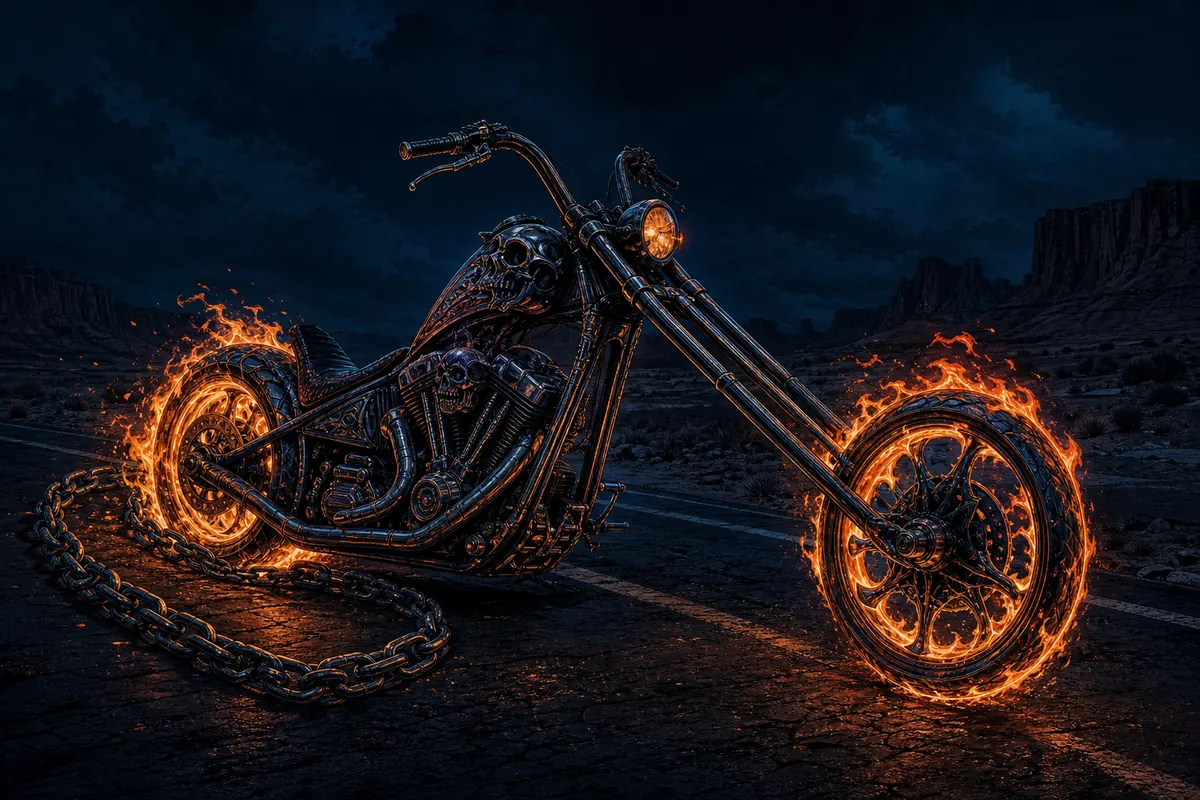
What bike does Ghost Rider ride?
In the first Nicolas Cage movie, the recognizable Ghost Rider bike is a production-built custom chopper with an exaggerated wheelbase, long fork, heavy metal bodywork, and a supernatural digital transformation. It is often described as Panhead-inspired, but calling it an ordinary showroom Harley-Davidson is misleading because the screen design combines custom fabrication, stunt needs, and effects work.
In Ghost Rider: Spirit of Vengeance, Johnny Blaze rides a more compact machine commonly identified as being based on the Yamaha VMAX. The scorched Hell Cycle seen on screen is still a fictional transformed version. In comics, the safer name is simply the Hell Cycle: a mystical vehicle that can be summoned, transformed, repaired, or replaced as continuity requires.
Ghost Rider bike comparison at a glance
Search results often mix the two films, comic art, replicas, toys, and fan builds. This table separates the questions that can be answered from the details that should remain qualified.
| Version | Best identification | What is real | What is fictional |
|---|---|---|---|
| Ghost Rider (2007) | Purpose-built custom chopper; commonly described as Panhead-inspired | A rideable production/stunt motorcycle and custom fabrication | Flaming wheels, supernatural metal details, impossible transformation |
| Spirit of Vengeance | A darker, compact motorcycle commonly identified as VMAX-based | A practical base bike used for filming | Charred Hell Cycle skin, fire effects, supernatural performance |
| Johnny Blaze in comics | Hell Cycle | Motorcycle design language varies by artist | Summoning, hellfire, wall riding, mystical repair |
| Danny Ketch | A distinct Hell Cycle with a more armored 1990s silhouette | No single permanent road model | Supernatural creation and movement |
| Robbie Reyes | Usually a muscle car, not a motorcycle | The vehicle identity changes with the host | Hell Charger transformation |
| Cosmic Ghost Rider | Cosmic bike or spacefaring ride | Comic design rather than a production model | Space travel and cosmic energy |
The 2007 Ghost Rider chopper: why it is not one stock model
The 2007 movie builds Johnny Blaze around stunt-rider culture, so a stretched chopper communicates his identity before the skull and hellfire appear. Its long front fork, low seat, oversized wheels, and sculpted metal surfaces are visual storytelling. Those proportions are more extreme than a normal daily motorcycle because the bike has to remain readable in wide shots, close-ups, merchandise, and effects sequences.
Many fan answers reduce the bike to a Harley-Davidson Panhead. Panhead describes a historic Harley engine family and a recognizable custom-bike vocabulary; it does not prove that every visible part came from one catalog motorcycle. A more accurate answer is that the movie Hell Cycle is a custom production design with Panhead/chopper influence. Replicas may choose different donor engines, frames, brakes, and wheel sizes while preserving the silhouette.
This distinction also explains why searches for a Ghost Rider bike price produce inconsistent numbers. A licensed toy, a visual replica, a road-legal custom build, and a surviving screen-used prop are completely different markets. There is no official new-bike price for the fictional Hell Cycle.
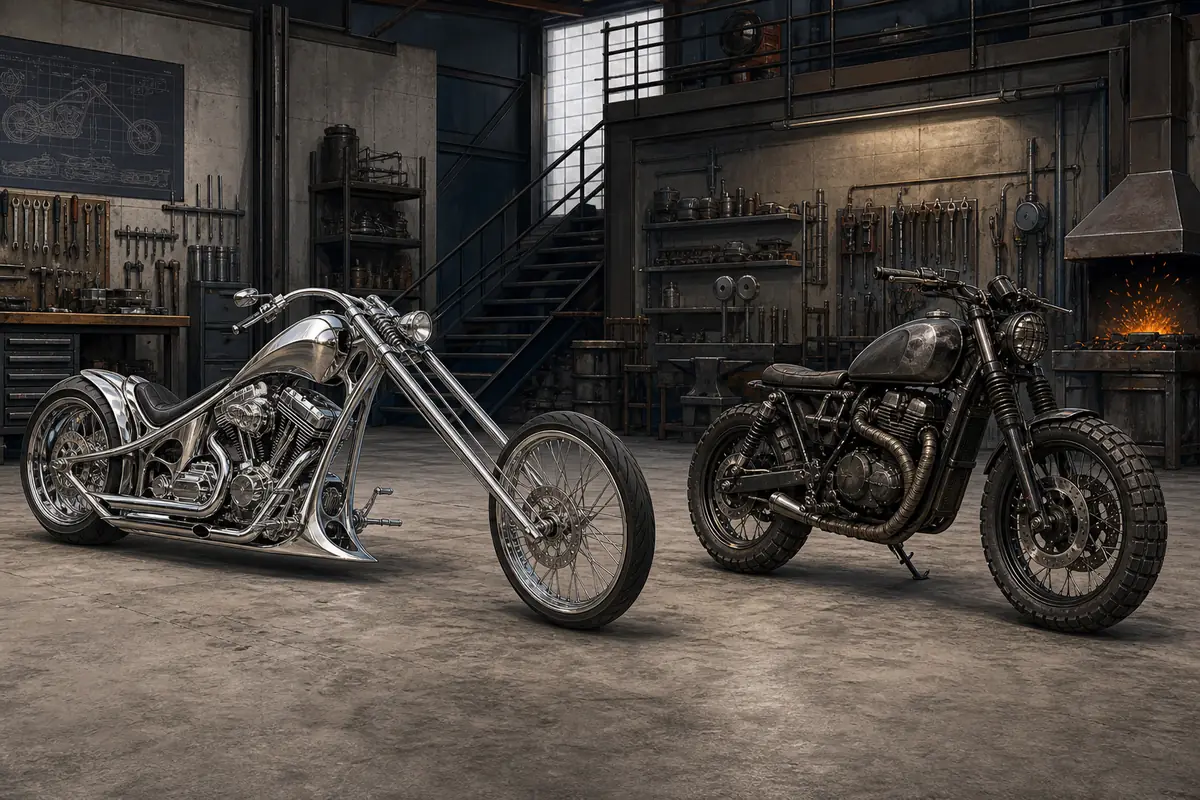
Spirit of Vengeance bike: the VMAX-based answer
The sequel changes both the landscape and the motorcycle language. Instead of polished chrome and a show-bike profile, the transformed machine looks burned, dense, and mechanical. The practical motorcycle is commonly identified as a Yamaha VMAX base, a power-oriented model whose muscular frame fits the harsher visual approach.
Even here, the answer needs a boundary. A standard VMAX does not leave the factory with blackened supernatural bodywork or burning tires. The film combines a usable motorcycle, production modifications, stunt setup, and visual effects. Readers trying to identify a real bike should search the base model; readers trying to reproduce the Hell Cycle appearance are looking at a custom fabrication project, not a factory trim level.
The release year can also confuse searches. Sony lists Ghost Rider: Spirit of Vengeance as a 2012 title on its current movie page, while some databases and territories associate it with festival or 2011 release activity. The motorcycle identification does not change, but source dates should be labeled rather than treated as a contradiction.
What is the Hell Cycle in Marvel comics?
Hell Cycle is the useful umbrella term for Ghost Rider's supernatural motorcycle. It is less like one registered vehicle and more like an extension of the Spirit of Vengeance. Stories may show it appearing when needed, changing shape, crossing surfaces a normal bike cannot use, surviving damage, or carrying hellfire through its wheels and frame.
That flexibility is why a permanent make-and-model answer fails for the comics. Artists redesign the machine to fit the host, decade, tone, and panel composition. Johnny Blaze often keeps the classic biker language. Danny Ketch's ride tends to look heavier and more armored. Future or cosmic versions can abandon real-world engineering almost completely.
The motorcycle matters thematically as well as visually. Johnny Blaze begins as a stunt rider, so the vehicle connects his human life to the curse. The Hell Cycle turns speed, risk, and performance into a supernatural pursuit tool. It is not merely transportation added after the character was designed.
Ghost Rider vehicles by host
Not every Ghost Rider should be forced onto the same chopper. Vehicle choice is one of the fastest ways to recognize which host or branch of the mythology a story is using.
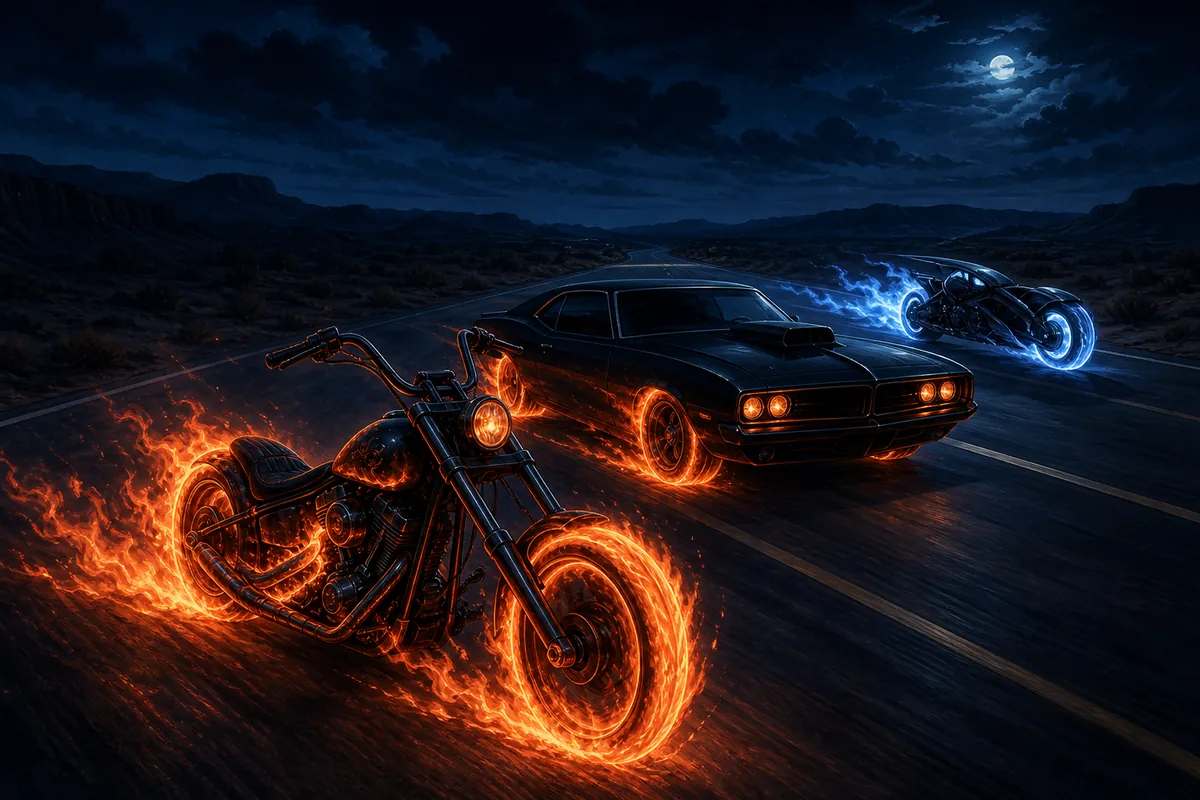
Johnny Blaze and Danny Ketch
Johnny carries the clearest connection to American stunt riding and chopper imagery. Danny Ketch also uses a motorcycle, but his 1990s stories helped establish a more armored, aggressive Hell Cycle silhouette. Their bikes share supernatural function without needing identical parts.
Robbie Reyes
Robbie Reyes is the major exception beginners should remember. His signature ride is a black muscle car, often called the Hell Charger, so a page that defines every Ghost Rider vehicle as a bike would erase one of Marvel's most important modern reinventions.
Cosmic and alternate riders
Cosmic Ghost Rider and alternate-universe riders can use vehicles shaped by space travel, futuristic technology, animals, or the logic of a single story. These designs belong to their continuity and should not be used to identify the 2007 movie bike.
How to verify a Ghost Rider motorcycle claim
A useful identification starts by naming the medium and scene. Ask whether the image comes from the 2007 film, the sequel, a specific comic issue, a toy, a replica auction, or fan art. Then separate the practical base motorcycle from the transformed design. This prevents a CGI wheel, replica frame, or toy specification from being reported as a factory feature.
Use first-party movie pages to verify title, year, cast, and official synopsis. For exact mechanical specifications, look for production documentation, a traceable builder interview, a manufacturer archive, or a well-documented auction listing. Social posts and unlabeled image boards can help locate a lead, but they are weak evidence for an engine code or screen-used provenance.
Finally, treat any bike advertised as 'the Ghost Rider motorcycle' with caution. Ask for frame and engine numbers, registration status, build invoices, ownership history, and proof that the object appeared on screen. Visual similarity alone proves only that it is a replica or themed custom.
- Identify the exact film, comic issue, or host.
- Separate the practical donor bike from the supernatural design.
- Confirm model claims with production, builder, manufacturer, or provenance records.
- Label replicas and editorial illustrations clearly.
- Avoid quoting a price without specifying toy, replica, custom build, or screen-used prop.
Quick verdict
For a short answer, call the first movie bike a custom Panhead-inspired chopper, call the sequel motorcycle VMAX-based, and call the comic vehicle the Hell Cycle. Then add the host: Johnny and Danny are bike-centered, Robbie Reyes is car-centered, and cosmic variants follow their own continuity. That wording is more accurate than pretending every flaming Ghost Rider vehicle is the same Harley-Davidson.
Ghost Rider Bike FAQ
What is the Ghost Rider bike name?
In Marvel stories it is generally called the Hell Cycle. Movie discussions may instead name the practical base or describe the custom chopper.
Is the Ghost Rider bike a Harley-Davidson?
The 2007 design uses strong Harley/Panhead and custom-chopper language, but the on-screen Hell Cycle is a purpose-built production design, not one standard showroom model.
What bike is in Ghost Rider: Spirit of Vengeance?
It is commonly identified as a Yamaha VMAX-based motorcycle. The scorched, flaming version is a fictional transformation created with production modifications and effects.
Why does Ghost Rider ride a motorcycle?
Johnny Blaze is a stunt rider, so the motorcycle links his human identity, appetite for risk, and supernatural pursuit. Other hosts can use different vehicles.
Can you buy a real Ghost Rider bike?
You can buy toys or commission themed replicas, but there is no factory Hell Cycle. Road legality, price, and accuracy depend on the donor bike and custom work.
Official context and verification sources
Sony's official pages verify the two films and their release context. Marvel's character page is the first-party reference for Johnny Blaze; exact motorcycle specifications still require production or builder documentation.