
Marvel's Midnight Suns gameplay guide
Ghost Rider in Midnight Suns: How Robbie Reyes Plays
Ghost Rider is Robbie Reyes in Marvel's Midnight Suns, and his tactical identity is a risk-and-reward loop: some cards spend his health, while KOs help build Souls that can restore it. Plan around who gets the final blow, when to spend the meter, and which teammates can cover his self-damage.
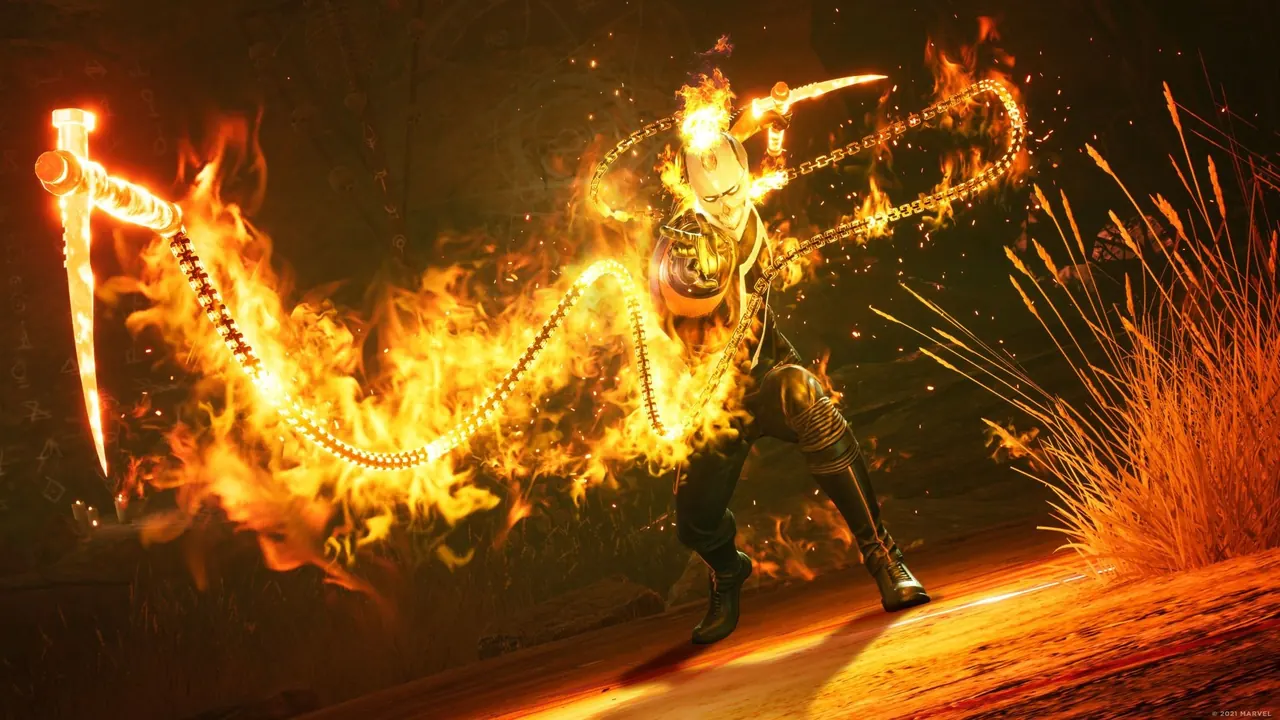
What does Ghost Rider do in Midnight Suns?
Ghost Rider is the damage dealer who turns controlled knockouts into a survival resource. In the game he is Robbie Reyes, not Johnny Blaze: his chain, Hellfire, and customized car belong to a different host and continuity. Several of his cards trade health for damage or control, so he is strongest when a turn is planned as a sequence instead of a string of unrelated attacks.
The core plan is simple to remember: soften targets, let Robbie secure useful KOs, build the Souls meter, then use its payoff before the health bill becomes dangerous. This guide explains the loop, deck choices, challenge preparation, and team roles. It does not claim one fixed deck is best for every difficulty, mission modifier, upgrade level, or card draw.
Who is Ghost Rider in Marvel's Midnight Suns?
The playable Ghost Rider is Robbie Reyes, a young mechanic from East Los Angeles whose supernatural identity is tied to a car and a different origin from Johnny Blaze's motorcycle story. The official 2K hero guide names him as Ghost Rider and describes his priorities around family, friends, and customized hot rods. That makes him a distinct version of the character, not a costume swap for the 2007 film hero.
In battle, think of Robbie as a high-impact attacker with a health-management constraint. His cards can hit hard or affect several enemies, but some of that power is paid for with his own life. The cost is deliberate design: you are deciding whether the damage now will create a KO, improve the next draw, or leave Robbie too exposed to finish the encounter safely.
The Steam store lists Marvel's Midnight Suns as a Firaxis Games tactical RPG published by 2K. The format matters for a Ghost Rider build: card order, target health, environmental attacks, redraws, and teammate actions all affect the same turn. You are not steering a motorcycle through a level or chaining real-time combos; you are solving a small battlefield puzzle with a hand of cards.
Understand the KO, Souls, and Drain Soul loop
Ghost Rider's resource loop rewards KOs that Robbie earns himself. GameRant's gameplay breakdown describes each Ghost Rider KO adding a bar to his Souls meter; after three bars, a Drain Soul heroic card is drawn. The official 2K hero guide also explains the health exchange: Ghost Rider can regain health by consuming the Souls of enemies he knocks out. Read the meter as a future recovery opportunity, not as permission to spend health without a plan.
Before playing a costly card, compare the target's remaining health with Robbie's available health and the likely damage from enemy turns. If the card can remove a target, the KO may pay toward the meter and reduce incoming attacks. If it only leaves several enemies alive, the same self-damage may make the next enemy phase harder. An exact damage preview is more useful than assuming a card will always finish a target.
When the Souls payoff arrives, use it when its healing and multi-target value solve a real problem. A heroic card that can chain across weakened enemies is most efficient when the targets are already within reach and Robbie can safely complete the sequence. The balance changes with upgrades and modifiers, so judge the hand on the current board rather than repeating a memorized combo from a different save or patch.
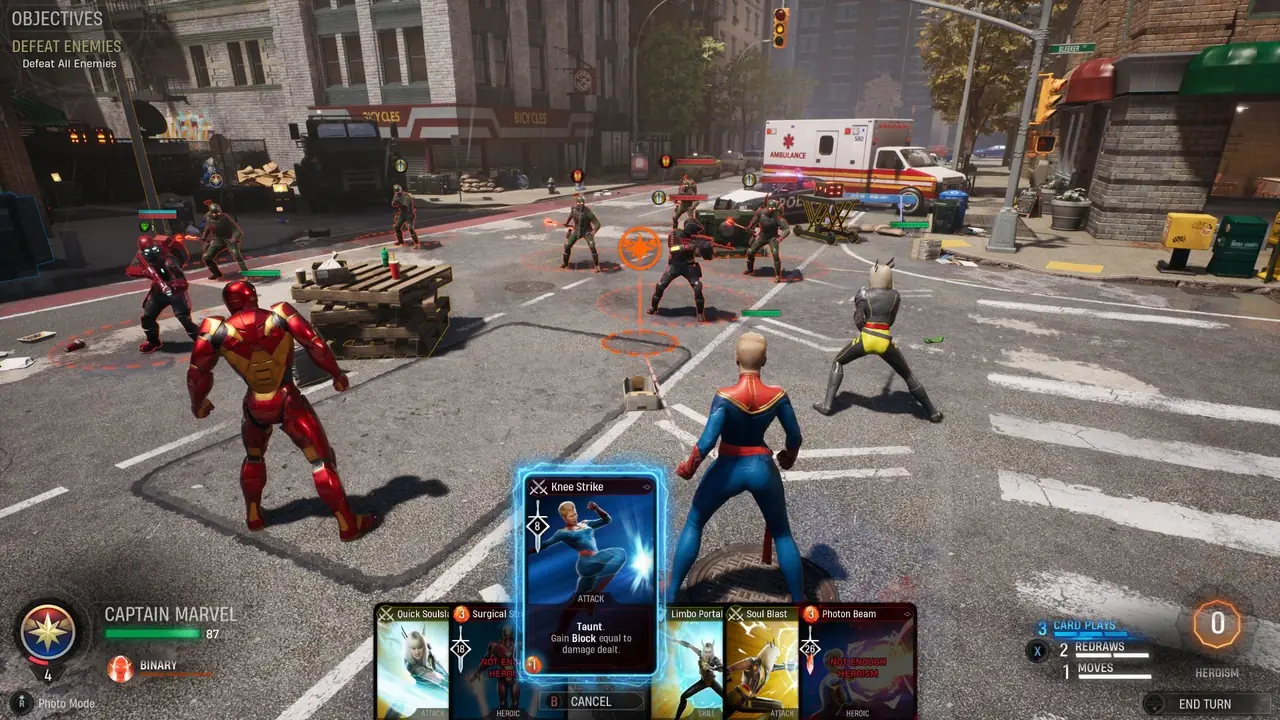
Build a Ghost Rider deck around risk, not a fixed meta list
A useful Ghost Rider deck has jobs to do: create a reliable KO, convert a good turn into Souls, and avoid making every action another health payment. Look at the cards in your current collection and upgrades rather than copying a list with no difficulty or progression context. The point is to preserve options: one card that sets up a kill can be more valuable than a second expensive attack when Robbie is already low on health.
The card-cost trade-off also affects how you spend card plays and Heroism. A damage card is attractive when it ends a threat, but a control effect or environmental action may protect the team while preserving Robbie's health. If another hero can weaken a target safely, let Ghost Rider take the finishing blow when building the Souls meter matters. If the team is under immediate pressure, survival can be worth more than meter progress.
Use this compact check before committing to a line. It is a decision aid, not a ranking of every card: card upgrades, difficulty, enemy armor, and mission objectives can change the best choice.
| Need this turn | Prefer | Watch for |
|---|---|---|
| A safe KO | A low-cost setup followed by a Ghost Rider finisher | An ally taking the KO and leaving the meter unchanged |
| Souls progress | A target Robbie can defeat without a risky second payment | Spending health on damage that does not secure a KO |
| Recovery | Drain Soul when its healing and chain targets have value | Holding the payoff while Robbie stays in lethal range |
| Team protection | Control, cover, or a teammate's defensive action | Building meter while several enemies can still attack |
Prepare for the Ghost Rider challenge
A character challenge is best approached as a fixed tactical puzzle, not as a test of your favorite full deck. Read the objective and the cards the encounter gives you before spending an action. Identify which enemy must be removed, which effect enables another play, and whether a KO has to come from Robbie to advance his resource loop. The exact solution depends on the encounter state shown in your game.
The common mistake is to treat every damage card as an immediate answer. A health-cost card can be correct when it creates the required KO or opens the next part of the sequence; it is wasteful when it leaves the important target alive and exposes Robbie. Preview target health, look for a chain or environmental follow-up, and keep the challenge's win condition ahead of optional damage.
If you mean a regular mission challenge rather than the hero's character puzzle, adapt the same method to the objective: protect a marked ally, stop a device, or finish a priority target before a timer runs out. Challenge labels and mission rules can vary. Use the encounter text as the authority and do not assume a deck guide overrides its special conditions.
- Read the challenge objective and note any required target or turn limit.
- Check which card effects can draw, chain, move, or enable a KO before spending health.
- Sequence setup first, then let Ghost Rider take the KOs that matter for Souls.
- Recheck the objective after each action; stop when the win condition is met instead of spending a turn on unnecessary damage.
Choose teammates who protect Ghost Rider's engine
The best partners solve a problem created by Robbie's costs. A hero who can draw enemy attention, apply control, or protect an ally can reduce the damage Ghost Rider takes after paying for his own cards. A healer or defensive support can also widen the safe window in which he can spend health. These are role-based recommendations; exact synergy depends on the cards available and the mission's enemy mix.
A second useful role is the setup attacker. Teammates can bring enemies into KO range, while Ghost Rider reserves a card to secure the final blow and advance Souls. Do not force this plan when an enemy must be removed immediately: a safe team KO is better than preserving meter while a dangerous attacker survives. The value of a Ghost Rider KO is real, but so is the incoming damage you prevent by ending a threat.
Build the three-hero team around the mission, not around a single idealized combo. If the encounter has many low-health enemies, chain attacks and area control can help create several finishing opportunities. Against durable targets, protection and reliable damage can matter more than meter speed. The screenshot below shows the wider team context: Ghost Rider is one part of a squad turn, not a solo action-game protagonist.
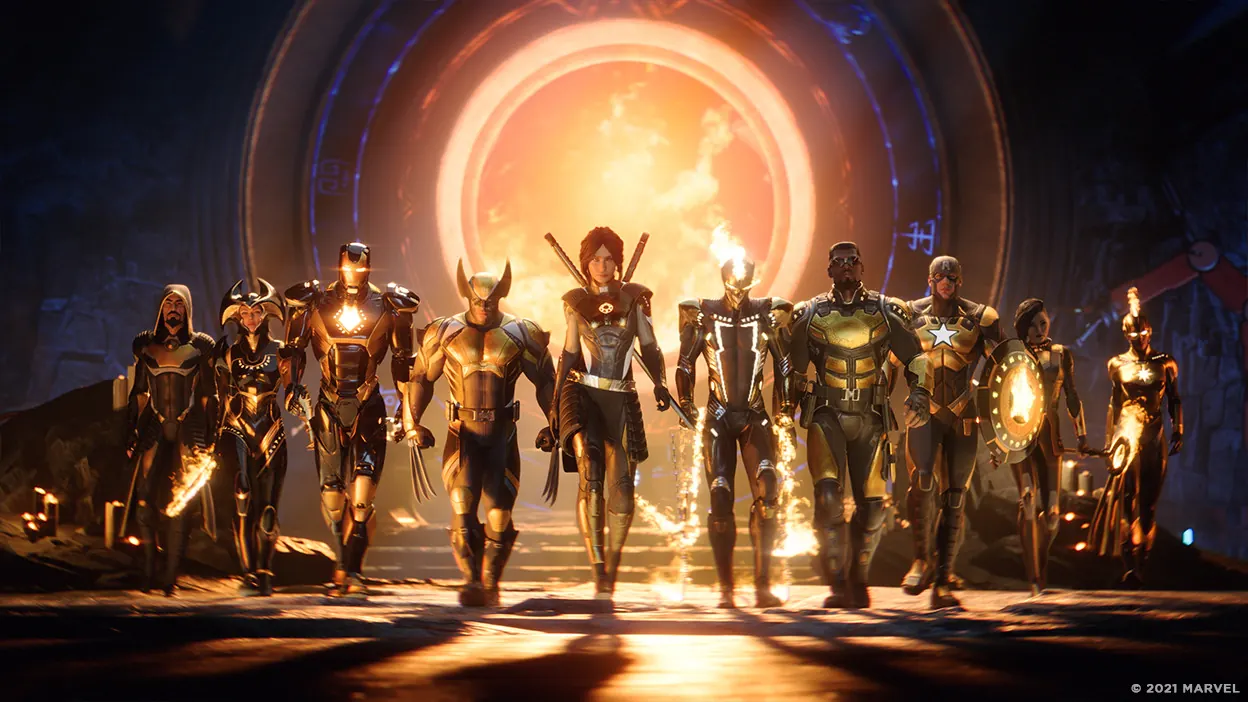
When Robbie should take the KO
Let Ghost Rider finish a weakened enemy when the Souls meter is useful and the play does not endanger the objective. This can both remove an enemy action and move him toward recovery. Avoid turning the rule into a quota: a teammate should take the kill if that is the only safe way to stop a high-priority threat.
When an ally should take the KO
Give the finishing action to a teammate when Robbie's health is low, the target is too risky to leave alive, or the mission rewards a different action. The right team sequence creates room for a later Ghost Rider turn instead of making every turn serve his meter.
A practical turn-by-turn example
Imagine the board has a sturdy enemy who will attack next turn and two weaker enemies that Robbie can plausibly finish. Start by checking the objective, the health preview, and which actions will still be available after a card is played. If a teammate can safely weaken one target without taking its KO, use that setup only when the enemy threat and objective allow it. The aim is to create a sure finish, not to maximize damage numbers on the screen.
Next, use Ghost Rider's lower-risk action to secure the first KO if it also advances Souls. Reassess his health and the remaining enemy attacks before paying for another card. If the second KO will fill the meter and the recovery card can stabilize Robbie, continue only when the meter and target health make that line credible. Otherwise use team control or a defensive effect, then keep the next turn open for the payoff.
This sequence demonstrates the decision rule rather than a scripted best turn. Different draws, upgrades, and enemy placements can change the answer. The useful habit is to price each health-cost action against a concrete result: a KO, a prevented enemy action, a completed objective, or a recovery window. If none follows, hold the card or choose a safer teammate action.
Midnight Suns, Midnight Sons, and the 2007 game are different searches
The game title is Marvel's Midnight Suns. Midnight Sons is the name associated with Marvel's supernatural comics team and storylines, including Rise of the Midnight Sons. The words are close enough to create mixed results, but a comics reading-order query is not asking for this tactical game's Robbie Reyes build. Use this guide for the 2022 game's card and battle questions, and use the site's comics guide for publication and reading paths.
This page is also separate from the standalone Ghost Rider video game released in 2007 alongside the Nicolas Cage film. That older action title is covered in the site's platform-history guide. Marvel's Midnight Suns is a later turn-based tactical RPG with a playable Robbie Reyes; a character appearance does not create a new standalone Ghost Rider game or update the 2007 release.
These distinctions keep the information useful: the host, game format, date, and search task should all match before you apply a tip. If your question is about Robbie's comics origin, his television arc, the Hellcycle, or Ghost Rider powers across versions, use the related guides rather than treating every result with the same character name as one continuity.
Ghost Rider Midnight Suns FAQ
Who is Ghost Rider in Marvel's Midnight Suns?
The playable Ghost Rider is Robbie Reyes. The game uses his character identity and car-centered imagery, rather than Johnny Blaze's 2007 movie version.
How does Ghost Rider's Souls meter work in Midnight Suns?
GameRant's gameplay breakdown reports that Ghost Rider KOs add bars to the Souls meter and that three bars draw Drain Soul. 2K's hero guide says he can regain health by consuming Souls of enemies he knocks out.
What is a good Ghost Rider deck in Midnight Suns?
There is no single list that fits every mission or upgrade level. Balance ways to secure KOs, Souls recovery, and lower-risk actions so the deck does not ask Robbie to spend health on every play.
How should I approach the Ghost Rider challenge?
Treat the character challenge as a fixed-hand puzzle: read the objective, sequence card effects, and spend health only when it enables the needed KO or next action. The encounter's displayed rules take priority.
Should Ghost Rider get every KO?
No. A Robbie KO can advance Souls, but stopping a dangerous enemy or protecting the mission can be more valuable. Take the safe team action when a kill quota would put the objective at risk.
Is Midnight Suns the same as Midnight Sons?
No. Midnight Suns is the tactical game. Midnight Sons refers to Marvel's supernatural comics team and related storylines.
Is this the 2007 Ghost Rider video game?
No. This guide covers Ghost Rider as a playable hero in the later tactical RPG. The 2007 standalone movie tie-in has a separate platform-history guide.
Sources and media notes
Character identity and healing details are checked against 2K's official hero guide; the Souls meter and Drain Soul sequence are attributed to GameRant's gameplay analysis. The three gameplay images are screenshots listed on Steam's official store page.