
GHOST RIDER LORE GUIDE
Zarathos Explained: Ghost Rider's Spirit of Vengeance
Zarathos is not simply another name for Johnny Blaze. He is a supernatural figure associated with the Spirit of Vengeance, and the relationship between spirit, host, and Ghost Rider identity changes across stories. This guide separates those layers so readers can understand Zarathos without turning every Ghost Rider version into one continuity.
The short answer
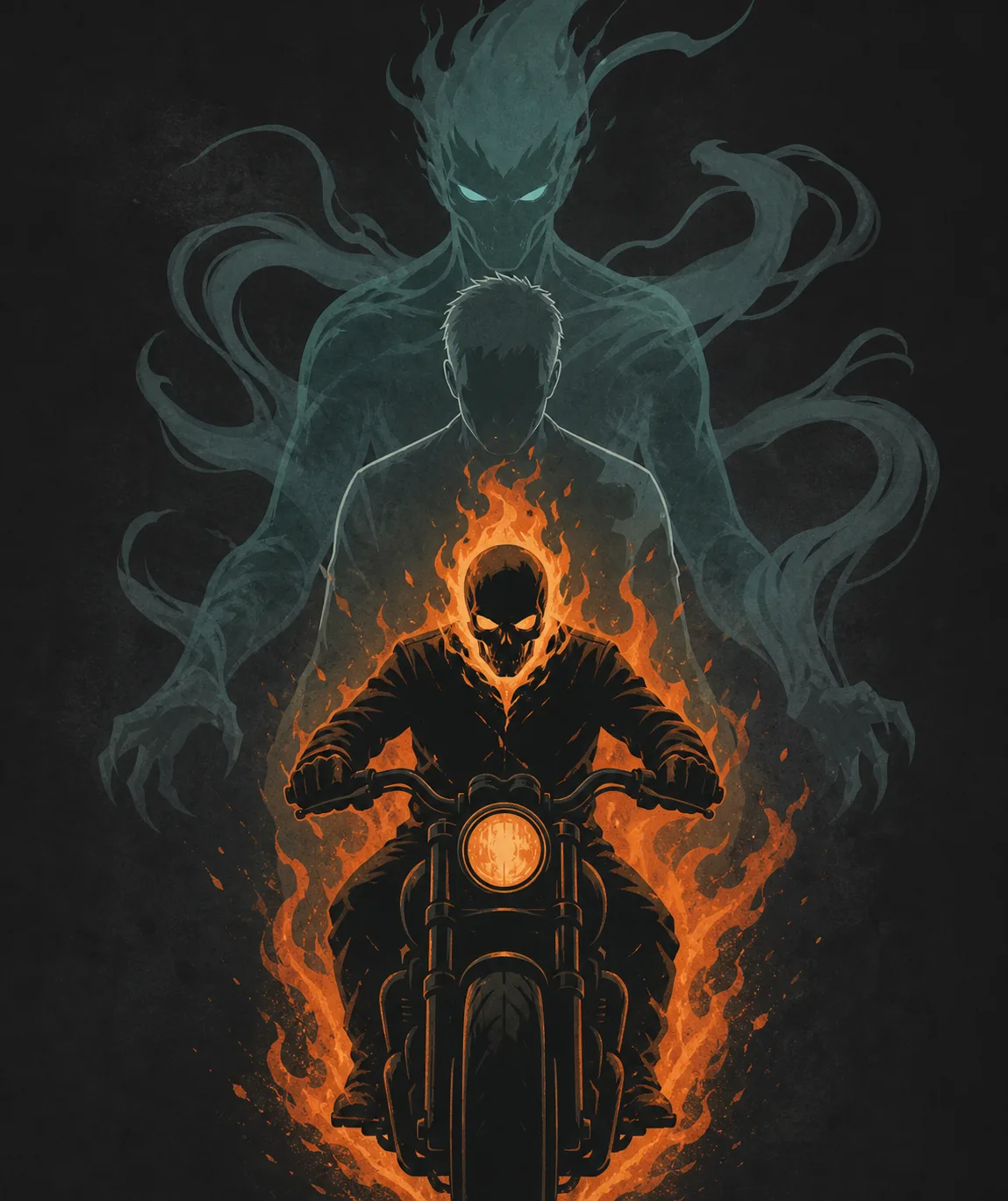
Zarathos is a powerful supernatural entity tied to the Spirit of Vengeance in Ghost Rider lore. The name does not replace the human host's identity: Johnny Blaze, Danny Ketch, or another host remains a separate layer of the story. In practical terms, Zarathos helps explain the force, memory, and conflict behind some classic Ghost Rider stories, while the host explains the human point of view.
The safest way to read the relationship is as a three-part model: the human host, the transformed Ghost Rider form, and the spiritual power or entity connected to that transformation. Stories can describe the bond as possession, partnership, resistance, or an unstable mixture. That is why a question about Zarathos should name the host and the medium before making a claim about control or power.
What is Zarathos in Ghost Rider?
Zarathos is best treated as a lore entity rather than a civilian alias. Readers usually meet the name while researching Johnny Blaze, the Spirit of Vengeance, demonic bargains, or the origin of Ghost Rider's hellfire. Those topics overlap, but they are not interchangeable. Zarathos gives the supernatural side of the character a name; Johnny Blaze gives one major story its human history.
The broad term Ghost Rider can describe a mantle, a transformed body, a host, or an adaptation. Zarathos is narrower. A useful explainer therefore starts with the entity and then shows how a particular host relates to it. This prevents the common mistake of treating a comic character's spiritual conflict as a simple second identity that works exactly like a superhero alter ego.
Zarathos is not Johnny Blaze
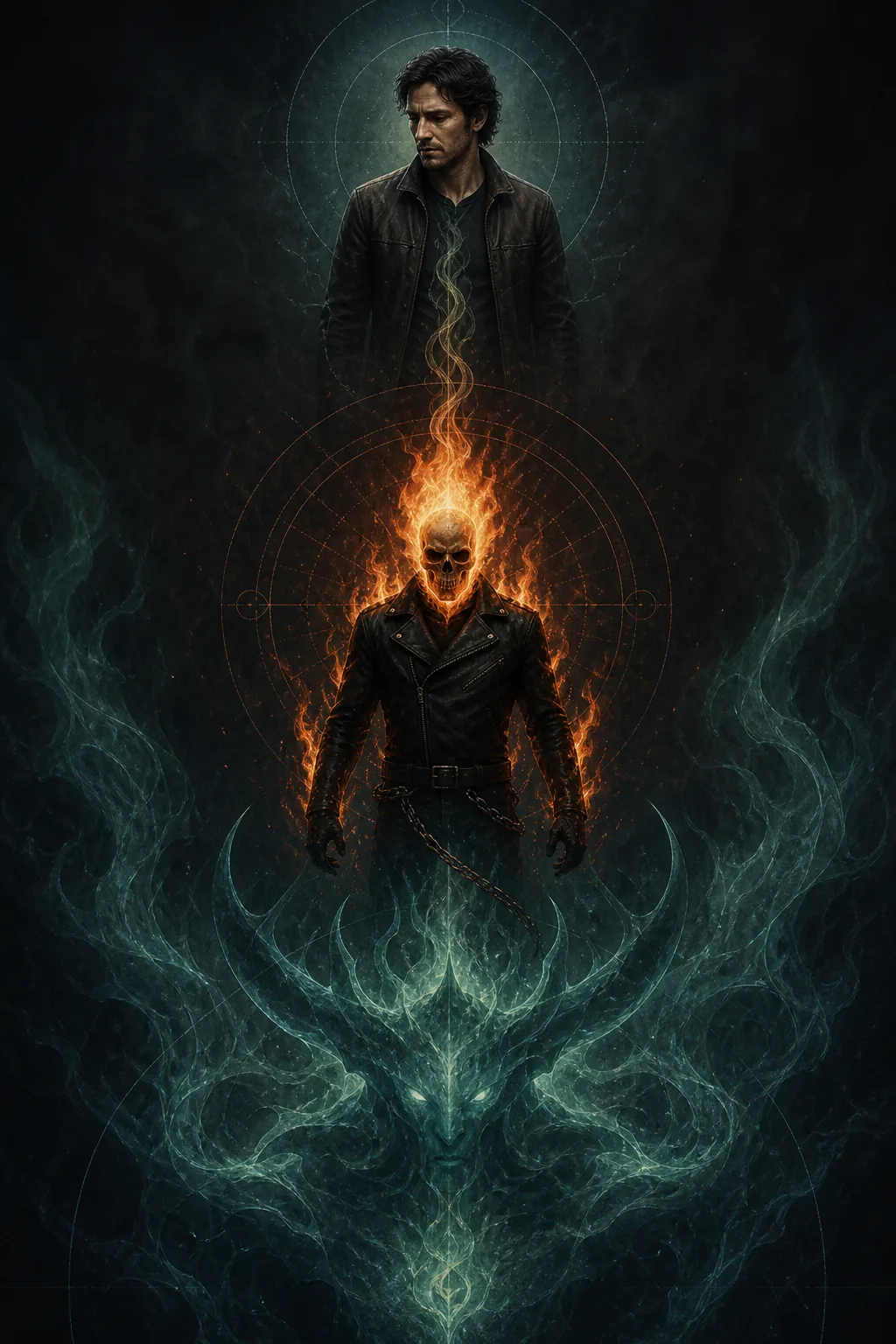
Johnny Blaze is a human host with his own memories, choices, relationships, and continuity. Zarathos belongs to the supernatural layer of the mythos. The two may be deeply connected in a story, but naming one does not answer the other. Use the Johnny Blaze Ghost Rider guide when the question is about the stunt rider's biography or reading path.
Why the name causes confusion
Search results often compress a complicated relationship into phrases such as Ghost Rider's real name, Ghost Rider demon, or Ghost Rider spirit. These phrases can point to different hosts, eras, and adaptations. The keyword Zarathos has a clearer entity focus, but the answer still needs a continuity label before it moves from a general lore explanation to an issue-level claim.
Zarathos and the Spirit of Vengeance
The phrase Spirit of Vengeance describes the judgment-driven supernatural force at the center of many Ghost Rider explanations. Zarathos is associated with that force, but a broad phrase is not automatically a complete character biography. Depending on the story, the Spirit can be discussed as a mission, a power, a mantle, or a spiritual presence. The host's resistance and cooperation are part of the drama.
This distinction also keeps the 2011 film title, Ghost Rider: Spirit of Vengeance, from being mistaken for a full comics rulebook. The movie title belongs to a screen continuity and a specific adaptation. For film order, cast, and availability questions, use the site's Ghost Rider movies guide; for the lore relationship, keep the host, entity, and medium visible.
| Layer | What it explains | Boundary to keep |
|---|---|---|
| Human host | A person's memories, choices, fear, and relationships | Do not use Zarathos facts as a complete host biography. |
| Ghost Rider form | The visible transformation, hellfire imagery, and mission in a scene | The appearance does not prove every version has the same origin. |
| Zarathos / spiritual force | The supernatural presence and conflict behind selected stories | Name the run or adaptation before treating one rule as universal. |
Zarathos origin and continuity boundaries
A beginner-friendly origin summary should explain the relationship without pretending that every retelling has identical mechanics. Zarathos is commonly presented as an ancient or powerful supernatural being connected to vengeance, but the details readers encounter can depend on the host, the run, and the version of Ghost Rider being discussed. A careful page distinguishes stable identity clues from story-specific revelations.
The most reliable continuity habit is to record three labels before sharing a fact: the medium, the host, and the era or title. A comics panel, a movie scene, and a fan summary may use the same names while answering different questions. When a source does not identify its issue or adaptation, keep the claim at the level of broad lore instead of inventing a precise chronology.
What can be stated safely
It is safe to say that Zarathos belongs to Ghost Rider's supernatural mythology and is closely connected to the Spirit of Vengeance discussion. It is not safe to assume that every alternate Ghost Rider, every screen version, or every future host is simply Zarathos in a different costume. The All Ghost Riders comparison is the better route for host-by-host boundaries.
Why adaptations need their own label
Adaptations can simplify, rename, combine, or visually imply a spiritual relationship. A movie title or a promotional image is evidence of that version's presentation, not proof that every comic rule carries over. Keep current adaptation announcements on the site's Ghost Rider MCU guide rather than merging rumor, movie memory, and comics lore here.
Zarathos powers and limits
Questions about Zarathos's power often become a ranking exercise, but the more useful answer is functional. Zarathos matters because the supernatural layer helps explain Ghost Rider's hellfire, judgment imagery, resilience, and internal conflict in stories where that connection is foregrounded. The exact feat still belongs to a named version and scene. A power shown by one host should not be copied into every Ghost Rider profile.
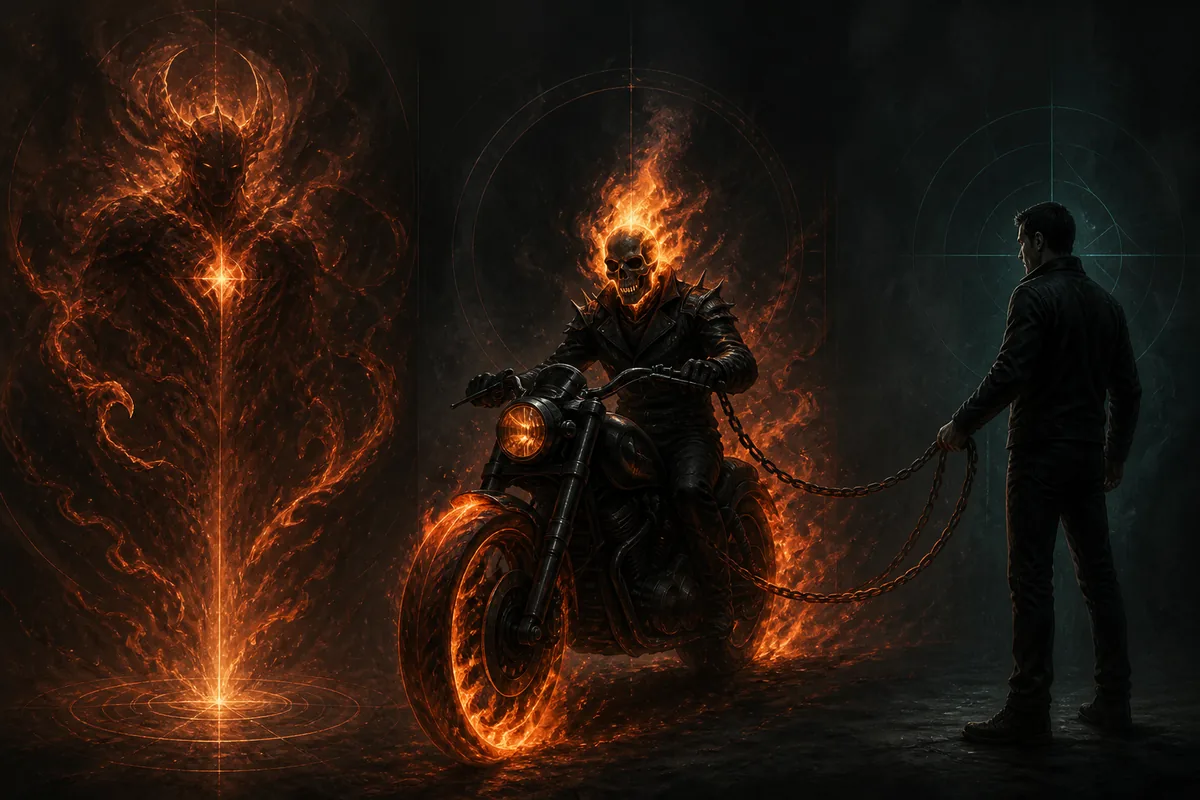
The site's Ghost Rider powers guide covers cross-host ability terms such as hellfire and the Penance Stare. This page adds the boundary around those terms: a supernatural entity, a host, and a transformed form can contribute different parts of what readers call a power. Treat the table below as a reading map, not a universal strength scale.
| Question | Useful answer | Limit of the claim |
|---|---|---|
| Does Zarathos explain Ghost Rider's fire? | He is part of the supernatural context used to discuss the classic Ghost Rider mythos. | Do not assign identical fire rules to every host or adaptation. |
| Is Zarathos stronger than Ghost Rider? | The comparison mixes the spiritual source or presence with the transformed identity. | Compare a named story's feat instead of using one permanent scoreboard. |
| Can the host control the power? | Control, resistance, and cooperation are story-dependent parts of the conflict. | Name Johnny, Danny, or another host before describing control. |
Zarathos vs Johnny Blaze and other Ghost Rider hosts
Zarathos is an entity-level topic, while Johnny Blaze, Danny Ketch, Robbie Reyes, and Cosmic Ghost Rider are host or version topics. They belong in the same knowledge graph because readers compare them, but they should not be flattened into one identity list. Johnny is the most important starting point for Zarathos questions because his classic stories make the host-versus-spirit tension easy to see.
Danny Ketch and Robbie Reyes show why the host boundary matters. Danny's legacy-era mythology and Robbie's car-centered modern setting create different entry points, while Cosmic Ghost Rider belongs to an alternate future that adds the Power Cosmic. Open the host comparison before treating a detail from one branch as a rule for all of them.
| Search name | What the reader is usually asking | Best page boundary |
|---|---|---|
| Zarathos | Who is the supernatural entity and how does it relate to vengeance? | Entity, spiritual force, continuity, and host relationship. |
| Johnny Blaze | Who is the classic rider and where should I start reading? | Human biography, origin, powers, and Johnny-focused comics. |
| Danny Ketch | What changed in the 1990s legacy era? | Host profile, motorcycle, chain, and reading path. |
| Robbie Reyes | Why is this Ghost Rider associated with a car and television? | Modern host, car, screen context, and comics branch. |
| Cosmic Ghost Rider | How does the alternate-future cosmic version work? | Frank Castle, Power Cosmic, and alternate continuity. |
Is Zarathos in Ghost Rider: Spirit of Vengeance?
This question is a useful example of mixed search intent. Ghost Rider: Spirit of Vengeance is the title of the 2011 Nicolas Cage sequel, while Zarathos is a comics-lore name tied to the Spirit of Vengeance discussion. A title match can explain why the terms appear together in search results, but it does not by itself prove that the film presents the same entity relationship as a particular comic run.
When answering a movie question, identify the film first and describe what the film shows. When answering a comics question, identify the issue, collection, or era. This simple split prevents the sequel's title from becoming a shortcut for a complete Zarathos biography and keeps movie availability separate from lore interpretation.
- Decide whether the source is about the 2007 film, the 2011 sequel, a comics run, or fan interpretation.
- Name the host or protagonist before describing the spiritual force behind the transformation.
- Separate an official synopsis or panel from a video title, marketplace listing, or fan image.
- Use the movie guide for watch order and the comics guide for issue-level reading context.
A beginner reading path for Zarathos questions
You do not need a complete Ghost Rider bibliography to understand Zarathos. Start with the relationship model, then read a host-focused entry, and only afterward branch into power scaling or alternate continuities. This order answers the common question quickly while leaving enough context to avoid repeating a fan summary as if it were a universal rule.
If you want a broader sequence, open the Ghost Rider comics reading order. It separates reader goals and host branches, which is more useful than placing every appearance into one long list.
- Learn the three layers: human host, transformed Ghost Rider, and supernatural force or entity.
- Read the Johnny Blaze guide for the classic host context and the Spirit of Vengeance conflict.
- Use the powers guide for ability definitions, then attach each feat to a named story.
- Compare Danny Ketch, Robbie Reyes, and Cosmic Ghost Rider only after the host boundary is clear.
- Check a dated official source when a question changes from stable lore to a current adaptation claim.
How to verify a Zarathos claim
A good answer should distinguish fact, interpretation, and speculation. A character page or issue synopsis can support an identity or publication claim. A reader's interpretation can explain why the host-versus-spirit conflict feels central. A rumor about a future adaptation needs a dated primary announcement. Keeping those evidence types separate makes the page more useful than a confident but untraceable power list.
Before sharing a Zarathos fact, check the exact spelling, the host, the medium, the issue or title, and whether the image is official. If one of those fields is missing, write a qualified summary. This is especially important for phrases such as Zarathos angel, Zarathos demon, or strongest Ghost Rider, which can change meaning across translations and fan communities.
What this page does not claim
This guide does not claim that every Ghost Rider is Zarathos, that one continuity settles every power debate, or that a film title confirms a comics relationship. It also does not use AI concept art as official Marvel artwork. The visuals on this page are explanatory illustrations; the surrounding HTML carries the actual lore and qualifications.
Where to go next
Choose the next page by intent: Johnny Blaze for the classic host, Ghost Rider powers for abilities, All Ghost Riders for comparison, or the comics reading order for a beginner route. That structure keeps Zarathos focused on the entity and Spirit of Vengeance question rather than competing with every Ghost Rider article.
Zarathos FAQ
Is Zarathos Ghost Rider's real name?
No. Zarathos is a supernatural entity or spiritual force associated with Ghost Rider lore, while the human host has a separate identity such as Johnny Blaze. The relationship can be central to a story, but the names are not interchangeable.
Is Zarathos a demon or an angel?
Those labels can oversimplify a continuity-specific character. Describe Zarathos through the named story and its Spirit of Vengeance context before applying a religious or moral category that may not fit every version.
Does Zarathos control Johnny Blaze?
Control, resistance, and cooperation vary by story. Johnny Blaze is the human host, while Zarathos belongs to the supernatural layer. Check the specific comics run before treating their relationship as permanent possession or complete partnership.
Is Zarathos stronger than Ghost Rider?
That comparison mixes an entity or spiritual force with a transformed identity. A better answer names the host, continuity, and feat being compared. The Ghost Rider powers guide is the right next step for a version-specific ability question.
Is Zarathos in Ghost Rider: Spirit of Vengeance?
The phrase Spirit of Vengeance is the title of the 2011 Ghost Rider movie and also a broader comics-lore term. The shared wording does not automatically prove that the film and a specific comics run use the same Zarathos relationship.
Does every Ghost Rider have Zarathos?
No. Ghost Rider stories include different hosts, alternate futures, adaptations, and spiritual rules. Name the host and continuity first, then decide whether Zarathos is part of that version's explanation.
Sources and update rules
Use official Marvel character and comics pages for publication, identity, and adaptation claims. This page uses original editorial concept illustrations rather than official Marvel art; current announcements and issue-level details should be checked against the dated primary source.