
Ability explainer
Ghost Rider Penance Stare Explained: Rules, Limits, and Immunity
The Penance Stare is Ghost Rider's most misunderstood ability. It is not simply a stronger blast of hellfire: it forces a guilty target to experience the pain they caused, and its result changes with the host, continuity, and story context.
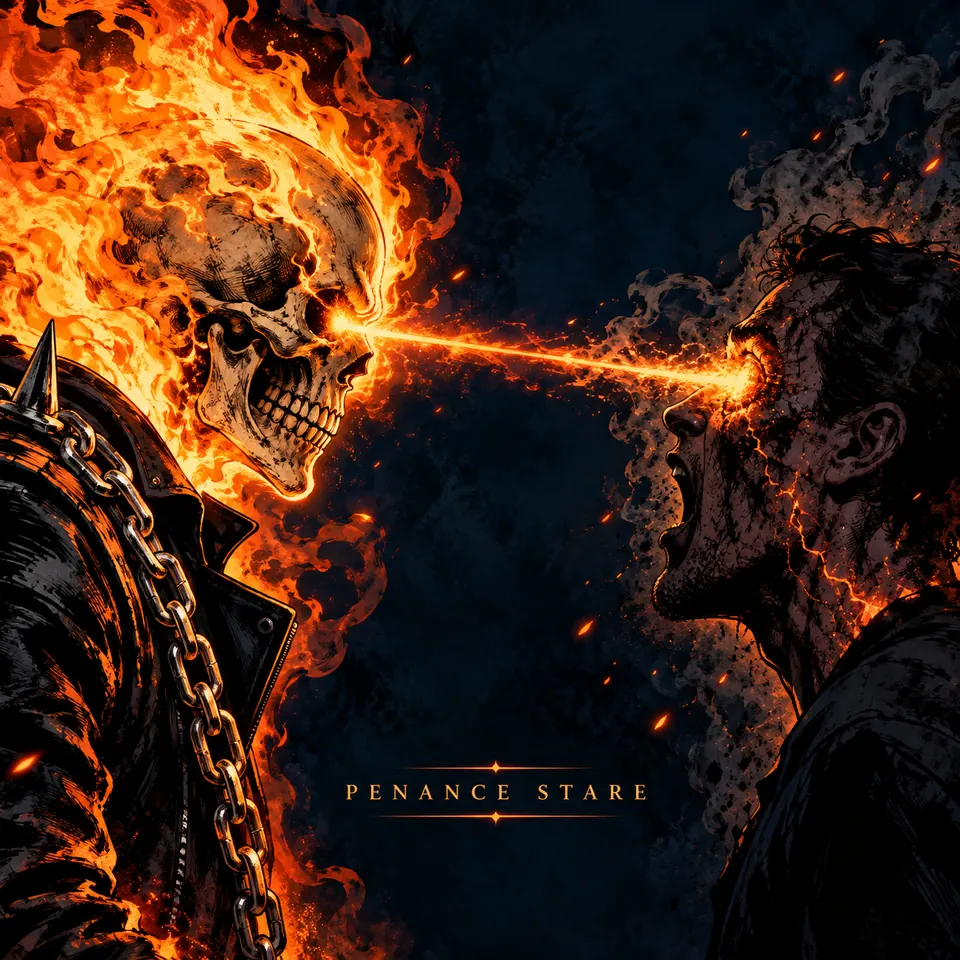
What does the Ghost Rider Penance Stare do?
The Penance Stare makes a target feel the suffering they have inflicted on other people. In the usual explanation, Ghost Rider establishes eye contact and turns the target's own guilt into the punishment. The ability is therefore tied to memory, responsibility, and the Spirit of Vengeance rather than to raw heat or physical strength.
That short answer needs one boundary: there is no single universal result across every comic run, film, and host. Some stories show an overwhelming reaction, while others show resistance, incomplete effect, or a target whose circumstances make the judgment unclear. Read the Stare as a supernatural judgment mechanic with continuity limits, not as an automatic win button.
How the Penance Stare works
The cleanest way to understand the ability is to follow the sequence instead of starting with a versus ranking. Ghost Rider identifies a target, establishes the required connection, and invokes the Spirit of Vengeance. The target then confronts the consequences of the harm they caused. The experience is usually described as pain or suffering returning to the person responsible, but the exact visual language depends on the writer or adaptation.
The word guilt matters because the Stare is not a random mind-control beam. A target's history, intention, empathy, and supernatural status can all affect the scene. A character who has never accepted responsibility may still be judged, while a character protected by a curse, alternate body, cosmic status, or unusual continuity may produce a different result.
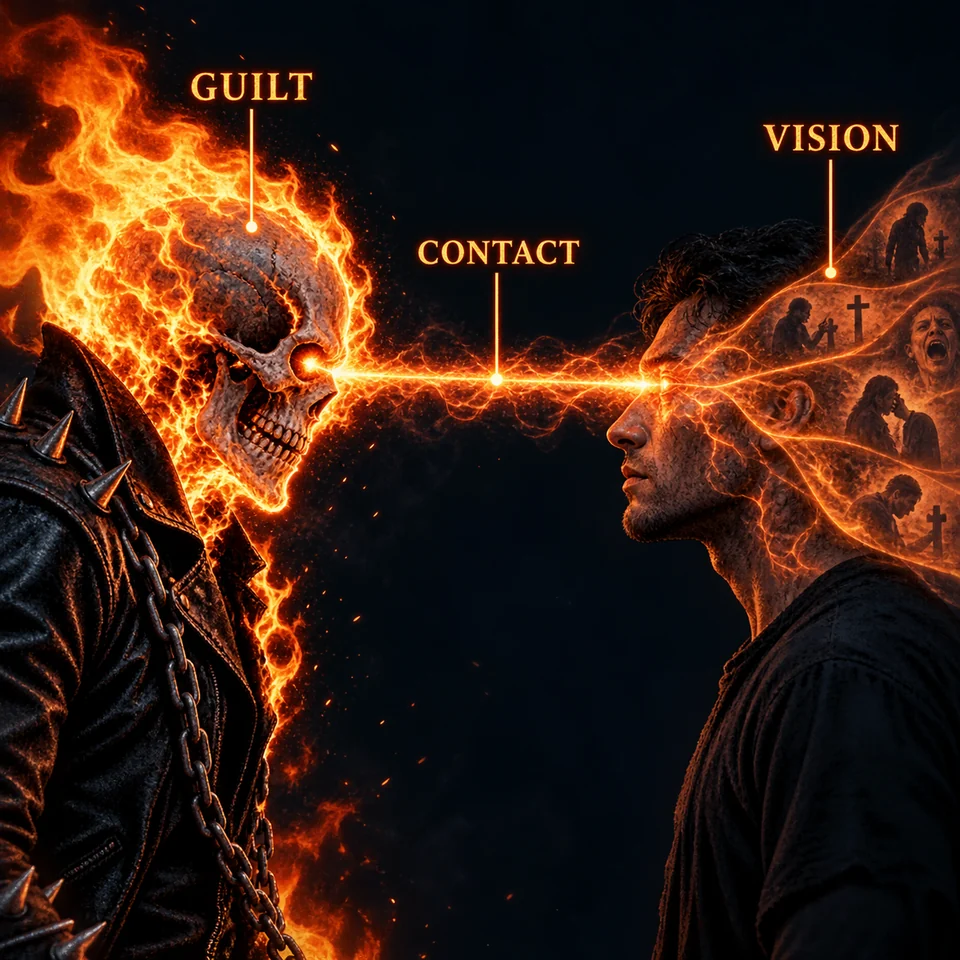
| Stage | What the story establishes | Why it matters |
|---|---|---|
| Guilt | The target has caused harm or carries a meaningful moral burden. | The ability is framed as judgment, not ordinary damage. |
| Contact | Ghost Rider reaches the target through the version of the Stare used in that continuity. | Distance, eye contact, and supernatural barriers can change the scene. |
| Vision | The target experiences the suffering linked to their actions. | The effect can be physical, psychological, spiritual, or a combination. |
| Aftermath | The story shows pain, collapse, resistance, recovery, or an interrupted effect. | One outcome should not be treated as a rule for every host. |
The main limits: guilt, contact, and continuity
The first limit is moral context. The Penance Stare has meaning because it reflects harm back at the person who caused it. That makes it different from a flamethrower: the same target can react differently depending on the story's treatment of responsibility. A page that lists only character names without explaining the moral setup misses why the power is distinctive.
The second limit is connection. Different stories show the Stare through eye contact, a close supernatural exchange, or a stylized visual link. Do not assume that every version works through a sealed helmet, a remote image, or an unrelated camera feed. The scene has to establish how Ghost Rider reaches the target.
The third limit is continuity. Johnny Blaze, Danny Ketch, Robbie Reyes, and other Ghost Riders do not always use identical rules. The Spirit involved, the host's condition, the medium, and the writer's intended stakes can all change the outcome. The safest answer to a power-scaling question names the host and story before making a claim.
It is not a generic mind-control attack
The Stare does not simply overwrite a target's thoughts or force a single command. Its recurring identity is punishment through remembered harm. That is why the ability is often more effective in a scene about guilt than in a scene that only asks which character has the larger energy output.
Resistance is not always full immunity
A target can resist, interrupt, survive, or appear unaffected for different reasons. A scene may show a temporary defense, a moral complication, a supernatural shield, or a version-specific rule. Calling every unusual result immunity erases the distinction between a blocked attack and a target who cannot be judged in that context.
Who can resist the Penance Stare?
Searches for who is immune to Ghost Rider's Penance Stare usually point to famous matchups. The reliable way to answer them is to classify the reason for resistance instead of building a permanent list. Stories may use a soul without ordinary guilt, a supernatural defense, a protective intervention, a different continuity rule, or a target whose actions are not presented as the kind of responsibility the Stare judges.
That means a single panel or movie moment is evidence for that story, not a universal chart. Use the table as a reading guide. It identifies the question a scene must answer before a reader can call the result immunity.
| Resistance type | What to check | Safe conclusion |
|---|---|---|
| Supernatural protection | Does another force block the connection or absorb the judgment? | The defense may belong to that story's magic system. |
| Unusual soul or body | Is the target a construct, spirit, clone, or cosmic entity in this continuity? | Do not assume a normal human rule applies. |
| Moral ambiguity | Does the story establish responsibility, intent, and remembered harm? | An unclear judgment is not proof of immunity. |
| Interrupted use | Was Ghost Rider restrained, distracted, or separated before the effect completed? | An interrupted attack is different from resistance. |
| Adaptation change | Is the evidence from a movie, television episode, or comic run? | Keep the result inside its own continuity. |
Movie versus comics: why the effect looks different
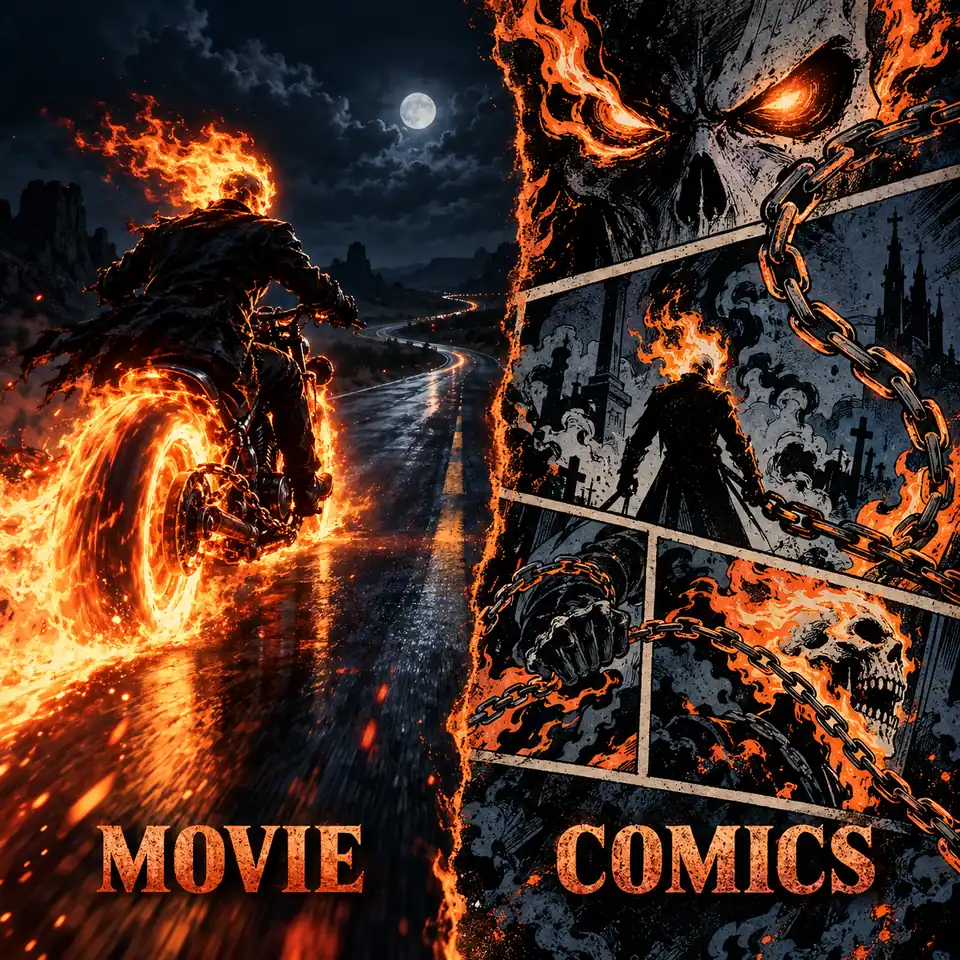
The movies tend to communicate the Penance Stare through a fast visual payoff: eyes meet, the target sees a burst of suffering, and the scene moves on. That makes the power easy to recognize, but it can hide the judgment logic underneath. A film may also compress a long comic explanation into one supernatural image.
Comics can spend more time on the target's memories, the host's intention, and the limits of the Spirit of Vengeance. Some runs treat the Stare as a signature finishing move; others use it to ask whether punishment, remorse, and justice are the same thing. When a movie scene seems simpler than a comic debate, the difference is often medium and pacing rather than a contradiction that needs one definitive ranking.
Penance Stare versus other Ghost Rider powers
The Penance Stare is easiest to misunderstand when it is treated as a stronger version of every other Ghost Rider ability. The powers page already covers the broader set of hellfire, chains, durability, and the transformed ride. This page narrows the question to judgment: what harm is reflected, how is the target reached, and what does the story say about responsibility?
That boundary also helps with internal linking. Use the Ghost Rider powers guide for the complete glossary, the Who Is Ghost Rider guide for hosts and identity, and this page when the search is specifically about the Penance Stare's rules or limits.
| Ability | Primary job | Question this page answers |
|---|---|---|
| Penance Stare | Reflects suffering and guilt. | Can this target be judged in this continuity? |
| Hellfire | Provides supernatural flame and attack language. | What does the fire do and what are its limits? |
| Chains | Creates a flexible close-combat weapon. | How does the host fight at physical range? |
| Transformed ride | Connects the host to movement and identity. | Which vehicle belongs to this Ghost Rider? |
| Durability | Lets the host survive extreme punishment. | How does this version endure a fight? |
How to read a Penance Stare matchup claim
When a forum post or video asks whether the Stare works on a famous character, check four facts before accepting the conclusion: which Ghost Rider is being used, which continuity supplies the evidence, whether a connection is established, and how the story defines the target's responsibility. This keeps a fun matchup discussion from becoming a false universal rule.
For example, asking whether the Stare works on the Punisher is not answered by the character's toughness alone. The useful comparison asks what the relevant story says about guilt, whether the attack completes, and whether the result is a direct feat or a hypothetical. The same method applies to Thanos, Deadpool, Galactus, or any other crossover question.
- Name the host and the version of the Spirit of Vengeance.
- Separate a direct scene from a fan prediction or versus hypothetical.
- Check whether the story establishes contact and a completed effect.
- Describe the result as resistance, interruption, recovery, or immunity only when the text supports that label.
Quick verdict
The Ghost Rider Penance Stare is a supernatural judgment ability that makes a guilty target experience the suffering they caused. Its identity comes from guilt and responsibility, while its limits come from contact, host, continuity, and the scene's moral setup. It is powerful and distinctive, but it is not a context-free automatic victory.
If you want the broader ability list, continue to the powers guide. If you want to understand why the judgment exists, start with the host overview and then follow the comics reading order. Those pages answer adjacent questions without collapsing every Ghost Rider rule into one list.
Ghost Rider Penance Stare FAQ
What does the Ghost Rider Penance Stare do?
It makes a target experience the suffering they caused, usually through a supernatural judgment connection. The exact result depends on the host, continuity, and story context.
Who is immune to Ghost Rider's Penance Stare?
There is no safe all-continuity list. A character may resist because of supernatural protection, an unusual soul or body, an interrupted attack, or a story that does not establish the required moral connection. Resistance in one story is not automatic immunity everywhere.
Does the Penance Stare work on the Punisher?
Treat that as a continuity-specific matchup rather than a permanent rule. Check whether the relevant story establishes guilt, contact, and a completed effect; a hypothetical answer should be labeled as a hypothetical.
Does Ghost Rider use the Penance Stare in the movies?
Film versions can show a compressed visual version of the judgment, but movies and comics do not always use identical rules. Keep a movie scene inside its film continuity before comparing it with a comic run.
Is the Penance Stare stronger than hellfire?
They do different jobs. Hellfire is an attack and transformation language, while the Penance Stare is a judgment mechanic tied to guilt. Ranking them as the same kind of damage misses the distinction.
Is the Penance Stare the same for every Ghost Rider?
No. Johnny Blaze, Danny Ketch, Robbie Reyes, and other hosts can appear under different rules. Name the host and continuity before treating a feat as a general Ghost Rider rule.
Sources and continuity note
Marvel's official character pages are the first-party baseline for Johnny Blaze context. Specific Penance Stare outcomes still need to be read inside the named comic, film, or television continuity.