
Enemies, demons, and continuity boundaries
Ghost Rider Villains: Blackheart, Mephisto, and Comic Enemies
The best Ghost Rider villains guide is not just a list of demon names. It separates Blackheart's movie role from Mephisto's deal-maker role, explains recurring comic antagonists, and answers why Ghost Rider is usually an antihero rather than a straightforward villain.
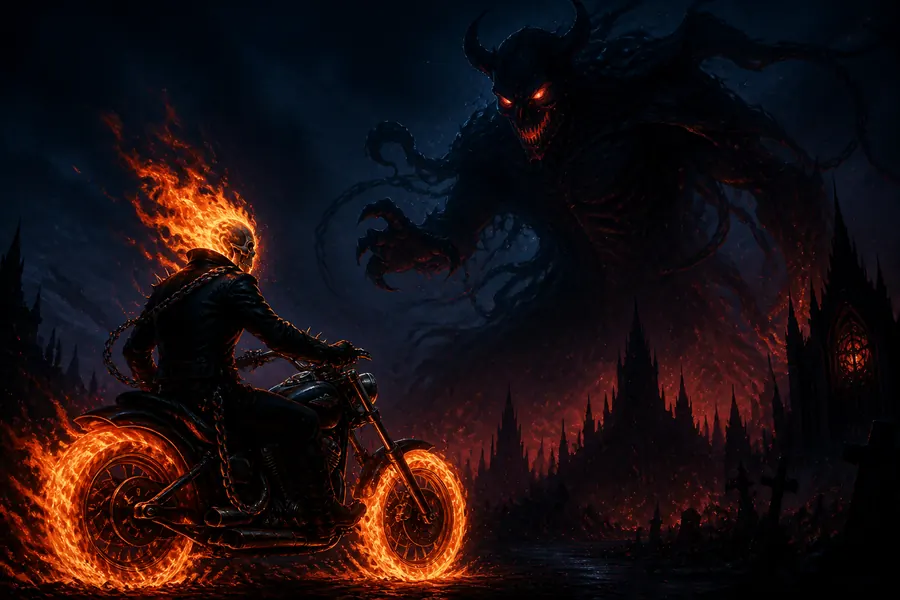
Quick answer: who are Ghost Rider's main villains?
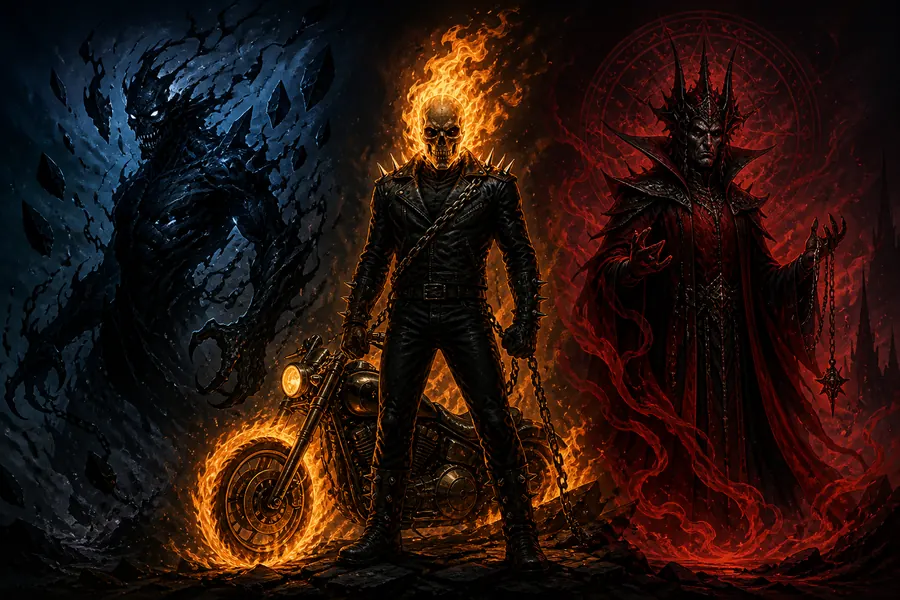
The names most often associated with Ghost Rider villains are Blackheart and Mephisto, followed by comic-specific supernatural antagonists such as Lilith, the Lilin, Zadkiel, and other occult powers tied to a particular host or era. Blackheart is the most recognizable movie enemy, while Mephisto is the manipulator behind bargains and larger supernatural conflicts. A complete list needs a continuity label because film, television, and comics do not use exactly the same enemy roster.
Ghost Rider himself is usually better described as a supernatural antihero or an instrument of vengeance than as a simple villain. The human host, the Spirit of Vengeance, and the judgment mission can pull in different directions. If you are still sorting out the identity, start with the Who Is Ghost Rider guide; if you want ability limits rather than enemies, use the Ghost Rider powers guide.
Ghost Rider villains at a glance
Searches for Ghost Rider villains usually combine two jobs. One reader wants the villain from the Nicolas Cage movie, another wants the main comic enemies, and a third wants to know whether the character is evil. These are connected questions, but they should not be answered with one flat ranking. The table below gives a useful orientation map before the continuity details.
Treat the categories as story functions, not permanent power levels. A villain can be a central movie antagonist, a recurring comic threat, a supernatural negotiator, or a host-specific problem without being the strongest character in every version of Ghost Rider.
| Name or group | What readers usually mean | Boundary to keep |
|---|---|---|
| Blackheart | A prominent demonic enemy, especially in the 2007 movie search cluster | Movie details and comic details are not interchangeable |
| Mephisto | A supernatural deal-maker and recurring Marvel adversary | Do not reduce every Ghost Rider origin to one identical bargain |
| Lilith and the Lilin | Comic occult threats connected to demon and bloodline mythology | Their relevance depends on the run and the host being discussed |
| Zadkiel and other occult powers | Era-specific comic antagonists that reshape the spiritual conflict | A story-specific enemy is not automatically the main villain |
Blackheart: the movie villain most people mean
When a searcher types Ghost Rider movie villains or Ghost Rider villain 2007, Blackheart is usually the first screen reference to clarify. The film presents him as a demonic antagonist whose goal is tied to power, territory, and a conflict with the forces surrounding Ghost Rider. That answer is useful for a movie question, but it should be labeled as a film-continuity answer rather than treated as a complete summary of every Blackheart appearance.
The common mistake is to use Blackheart as proof that all Ghost Rider stories share the movie's rules. A screen adaptation can simplify an origin, change a relationship, or combine several supernatural ideas into one visible opponent. Readers who want the two Nicolas Cage films in sequence should continue to the Ghost Rider movies in order guide; readers who want legal availability should use the where to watch page.
| Question | Movie-focused answer | Why the label matters |
|---|---|---|
| Who is the villain in Ghost Rider 2007? | Blackheart is the main demonic antagonist in that film's story | It answers the 2007 movie query, not every comics question |
| Is Blackheart the same as Mephisto? | No. They are separate names and story roles | A hierarchy or family connection must be sourced to a specific continuity |
| Should the movie villain define the comics? | No. Use the film as an adaptation with its own presentation | Comic runs can change hosts, enemies, rules, and tone |
Mephisto: deal-maker, not the same as Blackheart
Mephisto sits closer to the contract, temptation, and manipulation side of Ghost Rider's mythology. That is why searches about a devil, a bargain, or who caused a transformation often point toward Mephisto even when the reader is actually asking about a particular host's origin. The correct answer depends on the run: identify the human host first, then name the supernatural force and the exact story context.
This distinction also prevents a common spoiler-heavy shortcut. Saying that Mephisto is involved does not automatically explain every power, every Spirit of Vengeance rule, or every later status change. For Johnny Blaze's comic-specific origin and the King of Hell phase, the Johnny Blaze Ghost Rider guide owns the narrower host question. The villain guide should explain the role without pretending one sentence resolves every era.
How to use Mephisto in a quick answer
Say that Mephisto is a recurring supernatural manipulator associated with bargains and conflicts around souls, then state which host, film, or comics era the question refers to. Avoid calling him the only Ghost Rider villain or the permanent source of every transformation.
Why Blackheart and Mephisto are often confused
Both names appear in demonic and movie-adjacent Ghost Rider conversations, and a short search result may omit the continuity label. A useful comparison names the character's role first: Blackheart is the direct enemy in the 2007 film context, while Mephisto is more often the negotiator or larger supernatural power in the mythology.
Comic enemies beyond the movie
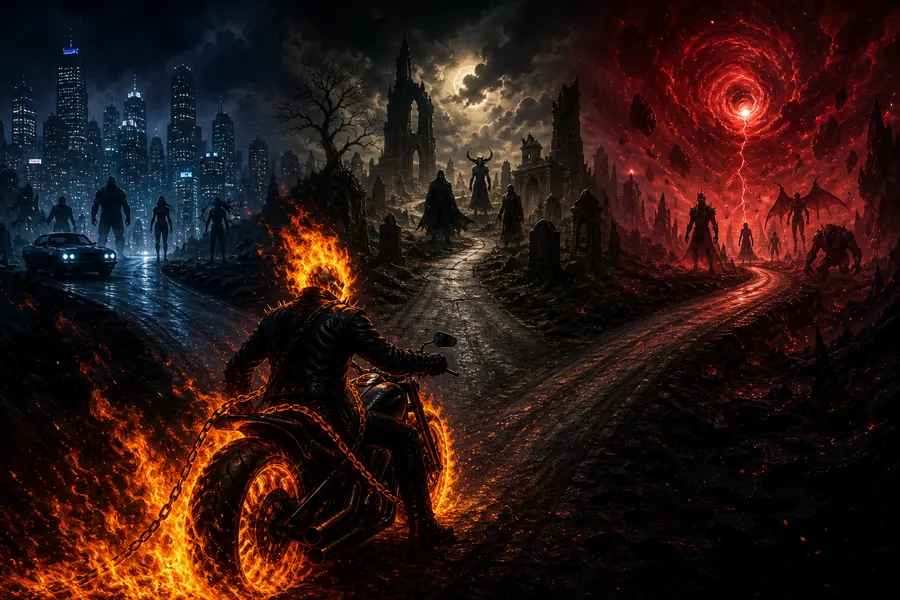
The comics widen the answer because the Ghost Rider role moves through different hosts, eras, and supernatural conflicts. Lilith and the Lilin connect to demon and bloodline mythology in particular comic contexts. Zadkiel belongs to a different kind of spiritual power struggle. Other demons, cults, angels, and occult authorities may matter for one run without becoming a universal Ghost Rider villain list.
This is why a good reading guide uses names as signposts rather than as a tournament bracket. A villain's importance can come from the way the antagonist tests the host's identity, the Spirit of Vengeance, a family relationship, or a continuity rule. If you want to compare hosts first, open the All Ghost Riders guide before assigning an enemy to the wrong character.
Lilith and the Lilin
Lilith and the Lilin are useful examples of comic-specific antagonists whose importance depends on the surrounding run. They point readers toward a larger demon mythology rather than a simple one-on-one movie fight. Keep the publication era visible when summarizing their role, especially when a question asks about family, lineage, or the 1990s Ghost Rider material.
Zadkiel and story-specific threats
Zadkiel shows why spiritual hierarchy questions need careful wording. An antagonist can challenge the mission, the host, or the meaning of vengeance without being the only enemy the mantle has ever faced. Use a focused source for issue-level claims and keep the broad page at the level of character function and continuity boundaries.
Is Ghost Rider a hero or villain?
The best short answer is antihero, with important qualifications. Ghost Rider's mission is built around vengeance and judgment, which can make the character frightening or morally severe. The human host may resist the Spirit of Vengeance, cooperate with it, or be caught between personal choices and supernatural purpose. That tension is part of the character rather than evidence that Ghost Rider belongs permanently on the villain side.
Searches for is Ghost Rider evil and is Ghost Rider a hero or villain often need a moral explanation more than a name list. A story can frame Ghost Rider as an avenger, a dangerous ally, a curse, or an antagonist to another character. State the version and the scene before making a moral label. This keeps the answer useful without turning a story-dependent character into a fixed alignment chart.
| Layer | What it contributes | Why it changes the villain answer |
|---|---|---|
| Human host | Memory, relationships, fear, and personal choices | The host may oppose the mission or redirect it |
| Spirit of Vengeance | Supernatural judgment and a reason to pursue wrongdoing | Its rules vary by story and should not be treated as a single lawbook |
| Story framing | The point of view and conflict of a particular run or adaptation | An ally in one story can look like a threat in another |
How to read a Ghost Rider villains list without mixing continuities
Start with the exact modifier in the search. A query for Ghost Rider movie villains needs a screen answer. A query for Ghost Rider comics needs an era or host-aware answer. A query for Blackheart Ghost Rider needs a character profile and a clear distinction between movie memory and comic context. The keyword itself is a clue to the page type, not permission to merge every result.
Use this four-step path when a search result feels contradictory. It keeps the answer fast for beginners while leaving room for a deeper comics route.
- Identify the medium first: 2007 film, Spirit of Vengeance film, television arc, or comics run.
- Name the host and the story era before comparing the enemy's powers, relationship, or origin.
- Separate the direct antagonist from a deal-maker, cosmic power, cult, or background threat.
- Open a focused movie, host, powers, or comics page when the question needs issue-level or availability details.
What this Ghost Rider villains guide does and does not claim
This page is designed to answer the broad list and comparison intent behind Ghost Rider villains, Ghost Rider villain, and Ghost Rider movie villains. It gives readers a stable map of the names that most often cause confusion, then routes the narrower movie, host, powers, and comics questions to pages built for those jobs.
It does not claim that one villain is the strongest in every continuity, that every version shares the same origin, or that a fan image proves an official adaptation. New releases, reprints, casting claims, and continuity changes should be checked against a dated primary source before they are described as confirmed.
Ghost Rider Villains FAQ
Who is the main villain in Ghost Rider 2007?
Blackheart is the main demonic antagonist in the 2007 movie context. That answer belongs to the film's continuity and should not be used as a complete list of Ghost Rider comic villains.
Is Mephisto the same character as Blackheart?
No. They are separate names and roles. Mephisto is commonly associated with supernatural bargains and manipulation, while Blackheart is the direct enemy many viewers remember from the 2007 film.
Is Ghost Rider a villain or an antihero?
Ghost Rider is usually best described as a supernatural antihero or avenger, but the exact framing depends on the host, story, and adaptation. The Spirit of Vengeance makes the character dangerous without automatically making him the villain.
Who are the main Ghost Rider comic enemies?
Blackheart and Mephisto are common starting points, while Lilith, the Lilin, Zadkiel, and other occult antagonists matter in specific comic runs. Use the host and publication era to decide which names belong in the answer.
Does every Ghost Rider have the Spirit of Vengeance?
Do not assume that every host or alternate branch follows exactly the same spiritual rules. Compare the named host and continuity first, then use the powers and comics guides for more specific context.
What should I read after a Ghost Rider villains list?
Use the Ghost Rider movies guide for screen continuity, the Johnny Blaze or All Ghost Riders guide for host context, and the comics reading order for a beginner path through different eras.
Sources and update rules
This guide uses official Marvel character and comics pages as the reference point for identity and continuity boundaries. Issue-level claims, adaptation details, and current announcements should be checked against the specific dated source rather than generalized from a villain list.